Pet loss
After pet loss, start where you are.
You do not have to know what to do with every photo, every routine, or every feeling today. There is room to begin with one small thing, or to begin another day.

There is no timetable to get right.
The loss of a pet can affect people deeply. Cornell’s veterinary support guidance explains that grief varies from person to person and does not follow a prescribed timeline. You do not have to compare your response with someone else’s.
A guide cannot tell you how today should feel. The ideas below are ways to remember your pet, not a checklist or a measure of how you are doing.
Choose one memory, if you want to.
You might keep a favorite photograph nearby, write down one of their nicknames, or save a short clip with a familiar sound. You can also leave the photos where they are for now.
If you want a small starting point, make a note with three headings: “a thing they loved,” “a thing that made me laugh,” and “an ordinary day together.” Add as much or as little as you want. There is no need to turn it into a finished tribute.
Give the words somewhere to go.
A note, a letter, or a voice memo can hold something you want to remember. You can address it to your pet, tell a friend a story, or keep a sentence just for yourself.
If someone you know is missing their pet, ask whether they would like to share a memory. University of Florida’s veterinary guidance encourages listening without judgment and offers remembering something specific about the pet as one way to show care.
Make a collection that can stay unfinished.
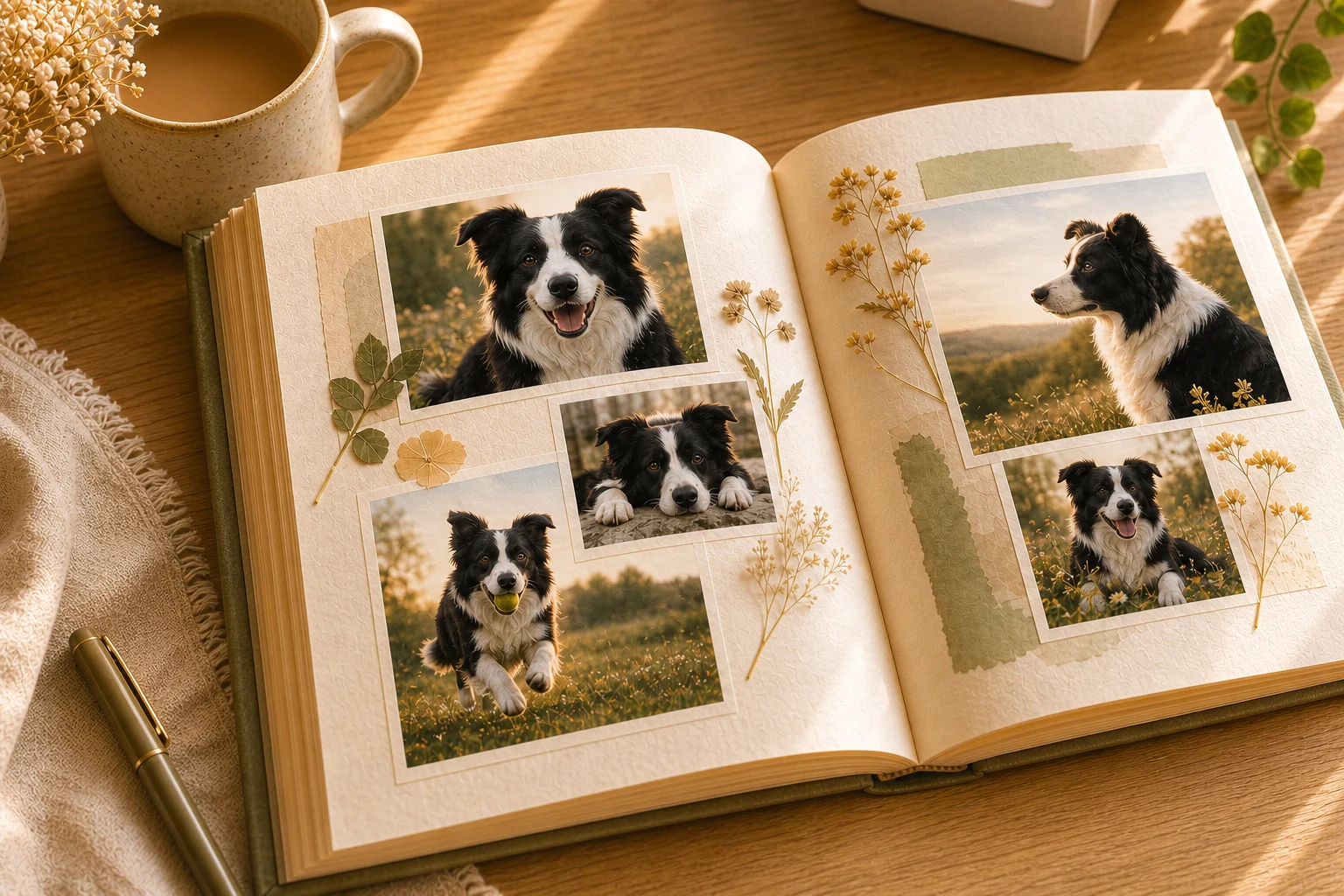
A folder of photos, a handwritten page, a favorite toy beside a picture: remembrance does not need to look a certain way. If you begin a memory book, leave space for things you may want to add later.
Keep original photos and videos backed up separately. Choose whether a collection is private or shared, and let other people know if you would rather they ask before posting a tribute or photograph.
Let support come from people, too.
Cornell’s resource page brings together pet loss information and support options. If grief is making daily life difficult, or you want someone to talk with, consider a qualified counselor or a support service that understands pet loss.
Besideo offers portraits, imagined stories and letters, and a place for personal memories. It does not provide grief counseling, communicate with pets who have died, or promise to change how you feel. You can choose an ordinary notebook, a conversation, or no activity at all.
Further reading & support
- Cornell University College of Veterinary Medicine: pet loss resources and support
- University of Florida College of Veterinary Medicine: supporting a loved one who is grieving
Our guides offer ideas for personal reflection and remembrance. They are not mental health care or a substitute for professional support.